
Shop fromIndia’s Most Affordable Electronics Store
from Rs.99.00
Don't miss this special opportunity today.



Showing 1–16 of 26 resultsSorted by latest

ATtiny85 is a small 8-pin microcontroller from Atmel and is based on Atmel's 8-bit RISC architecture. ATtiny85 is a high-performance, low-power microcontroller which combines 8KB ISP flash memory, 512B EEPROM, 512-Byte SRAM, 6 general purpose I/O lines, 32 general purpose working registers, one 8-bit timer/counter with compare modes, one 8-bit high speed timer/counter, USI, internal and external Interrupts, 4-channel 10-bit Analog to Digital converter, programmable watchdog timer with internal oscillator, three software selectable power saving modes, and debug WIRE for on-chip debugging. The device achieves a throughput of 20 MIPS at 20 MHz and operates between 2.7-5.5 volts.
By executing powerful instructions in a single clock cycle, the device achieves throughputs approaching 1 MIPS per MHz, balancing power consumption and processing speed.

ATtiny45 is a high-performance, low-power Atmel 8-bit AVR RISC-based microcontroller combines 4KB ISP flash memory, 256-Byte EEPROM, 256B SRAM, 6 general purpose I/O lines, 32 general purpose working registers, one 8-bit timer/counter with compare modes, one 8-bit high speed timer/counter, USI, internal and external Interrupts, 4-channel 10-bit Analog to Digital converter, programmable watchdog timer with internal oscillator, three software selectable power saving modes, and debugWIRE for on-chip debugging. The device achieves a throughput of 20 MIPS at 20 MHz and operates between 2.7-5.5 volts.
By executing powerful instructions in a single clock cycle, the device achieves throughputs approaching 1 MIPS per MHz, balancing power consumption and processing speed.

The high-performance, low-power Atmel 8-bit AVR RISC-based microcontroller combines 2KB ISP flash memory, 128B ISP EEPROM, 128B internal SRAM, universal serial interface (USI), full duplex UART, and debugWIRE for on-chip debugging. The device supports a throughput of 20 MIPS at 20 MHz and operates between 2.7-5.5 volts.
By executing powerful instructions in a single clock cycle, the device achieves throughputs approaching 1 MIPS per MHz, balancing power consumption and processing speed.

The high-performance, low-power Atmel 8-bit AVR RISC-based microcontroller combines 2KB ISP flash memory, 128B ISP EEPROM, 128B internal SRAM, universal serial interface (USI), full duplex UART, and debugWIRE for on-chip debugging. The device supports a throughput of 20 MIPS at 20 MHz and operates between 2.7-5.5 volts.
By executing powerful instructions in a single clock cycle, the device achieves throughputs approaching 1 MIPS per MHz, balancing power consumption and processing speed.

Atmel ATTINY13A-PU is AVR TINY series 8 pin DIP microcontroller, packed with high performance, low power 8 bit Advanced RISC Architecture. Its operational Voltage limit is 1.8V to 5.5V. It has 20 MHz CPU Clock, 6 general purpose I/O lines, 1KB ISP flash memory, 64B EEPROM, 60-Byte RAM. It has 1 timer, 2 PWM Channel, 4 Channel ADC inputs and a Watchdog. Operational Temperature range of this microcontroller is -40 to 85 degree C. Internal clock and ISP programming support by SPI protocol. Being small in size and DIP, it is particularly suitable for bread board applications and prototype development.

Atmega8A is a high-performance, low-power Atmel 8-bit AVR RISC-based microcontroller combines 8KB ISP flash memory, 1KB SRAM, 512B EEPROM, an 7-channel/10-bit A/D converter (TQFP and QFN/MLF), and debugWIRE for on-chip debugging. The device supports a throughput of 16 MIPS at 16 MHz and operates between 4.5-5.5 volts..
By executing powerful instructions in a single clock cycle, the device achieves throughputs approaching 1 MIPS per MHz, balancing power consumption and processing speed.

Atmega8535 is a high-performance, low-power Atmel 8-bit AVR RISC-based microcontroller combines 8KB of programmable flash memory, 544B SRAM, 512B EEPROM, and an 8-channel 10-bit A/D converter. The device supports throughput of 16 MIPS at 16MHz and operates between 4.5-5.5 volts.
By executing instructions in a single clock cycle, the device achieves through puts approaching 1 MIPS per MHz, balancing power consumption and processing speed.

ATMEGA8515 is a high-performance, low-power Atmel 8-bit AVR RISC-based microcontroller combines 8KB of programmable flash memory, 544B internal memory, up to 64KB external SRAM, and 512B EEPROM. The device supports a throughput of 16 MIPS at 16MHz and operates between 2.7-5.5 volts.
By executing instructions in a single clock cycle, the device achieves through puts approaching 1 MIPS per MHz, balancing power consumption and processing speed.

The ATmega48A-PU is a low power, CMOS 8-bit microcontrollers based on the AVR® enhanced RISC architecture. By executing instructions in a single clock cycle, the devices achieve CPU through put approaching one million instructions per second (MIPS) per mega hertz, allowing the system designer to optimize power consumption versus processing speed.

ATMEGA32A is a 40 pin, 8-bit AVR RISC-based microcontroller from Atmel. It is a low power, high performance microcontroller featuring 32KB self-programming flash program memory, 2KB SRAM, 1KB EEPROM, 8 channel 10-bit A/D converter and JTAG interface for on-chip-debug. The device acheives 16 MIPS throughput at 16 Mhz at 2.7-5.5V operation.
By executing powerful instructions in a single clock cycle, the device achieves throughputs approaching 1 MIPS per MHz, allowing you to optimize power consumption versus processing speed.

Arduino UNO uses ATMEGA328P-PU microcontroller and this controller comes pre-loaded with a Arduino UNO bootloader. Basically bootloader is a little piece of code that allows you to program the flash memory of the Arduino’s atmega328p via serial or USB instead of using an ICSP programmer.
If you are making a project based on Arduino UNO & you have made a customized PCB then you will be requiring bootloaded Atmega328 microcontroller. This is a ATmega328 in DIP package, pre-loaded with the Arduino (16MHz) Bootloader. This will allow you to use Arduino code in your custom embedded project without having to use an actual Arduino board. To get this chip working with Arduino IDE, you will need an external 16MHz crystal or resonator, a 5V supply, and a serial connection. You should select the Arduino UNO board within the Arduino IDE.

The ATMEGA328P-PU is a low-power CMOS 8-bit microcontroller based on the AVR enhanced RISC architecture. By executing powerful instructions in a single clock cycle, the ATmega328P-PU achieves throughputs approaching 1 MIPS per MHz allowing the system designer to optimize power consumption versus processing speed.
The AVR core combines a rich instruction set with 32 general purpose working registers. All the 32 registers are directly connected to the Arithmetic Logic Unit (ALU),allowing two independent registers to be accessed in one single instruction executed in one clock cycle. The resulting architecture is more code efficient while achieving throughputs up to ten times faster than conventional CISC microcontrollers.
The ATmega328P-PU AVR is supported with a full suite of program and system development tools including: C Compilers, Macro Assemblers, Program Debugger/Simulators, In-Circuit Emulators, and Evaluation kits.
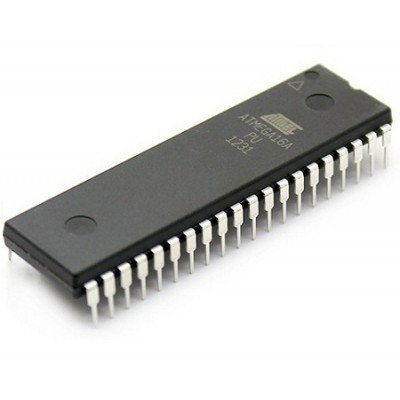
The ATmega16A is a low-power CMOS 8-bit microcontroller based on the AVR enhanced RISC architecture. By executing powerful instructions in a single clock cycle, the ATmega16A achieves throughputs approaching 1 MIPS per MHz allowing the system designed to optimize power consumption versus processing speed.
The AVR core combines a rich instruction set with 32 general purpose working registers. All the32 registers are directly connected to the Arithmetic Logic Unit (ALU), allowing two independent registers to be accessed in one single instruction executed in one clock cycle. The resulting architecture is more code efficient while achieving throughputs up to ten times faster than conventional CISC microcontrollers.
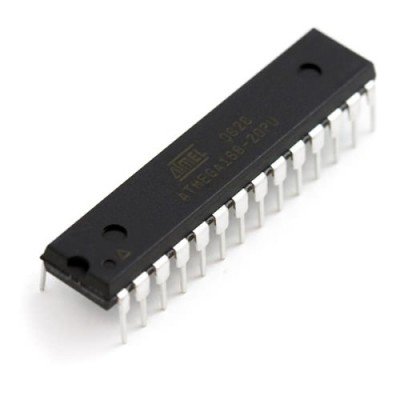
ATmega168 Microcontroller is the high-performance, low-power Atmel 8-bit AVR RISC-based microcontroller combines 16KB ISP flash memory, 1KB SRAM, 512B EEPROM, an 8-channel/10-bit A/D converter (TQFP and QFN/MLF), and debugWIRE for on-chip debugging. The device supports a throughput of 20 MIPS at 20 MHz and operates between 2.7-5.5 volts.
By executing powerful instructions in a single clock cycle, the device achieves throughputs approaching 1 MIPS per MHz, balancing power consumption and processing speed.

The P89V51RD2 is an 80C51 microcontroller by NXP (Phillips) with 64 kB Flash and 1024 bytes of data RAM. A key feature of the P89V51RD2 is its X2 mode option. The design engineer can choose to run the application with the conventional 80C51 clock rate (12 clocks per machine cycle) or select the X2 mode (6 clocks per machine cycle) to achieve twice the throughput at the same clock frequency. Another way to benefit from this feature is to keep the same performance by reducing the clock frequency by half, thus dramatically reducing the EMI.
The Flash program memory supports both parallel programming and in serial In-System Programming (ISP). Parallel programming mode offers gang-programming at high speed, reducing programming costs and time to market. ISP allows a device to be reprogrammed in the end product under software control. The capability to field/update the application firmware makes a wide range of applications possible.
The P89V51RD2 is also In-Application Programmable (IAP), allowing the Flash program memory to be reconfigured even while the application is running.

The 80C51 has separate address spaces for program and data memory. The Program memory can be up to 64k bytes long. The lower 4k can reside on-chip. Figure 1 shows a map of the 80C51 program memory. The 80C51 can address up to 64k bytes of data memory to the chip. The MOVX instruction is used to access the external data memory. The 80C51 has 128 bytes of on-chip RAM, plus a number of special function Registers (SFRs). The lower 128 bytes of RAM can be accessed either by direct addressing (MOV data addr) or by indirect addressing (MOV @Ri).